Featured
Table of Contents
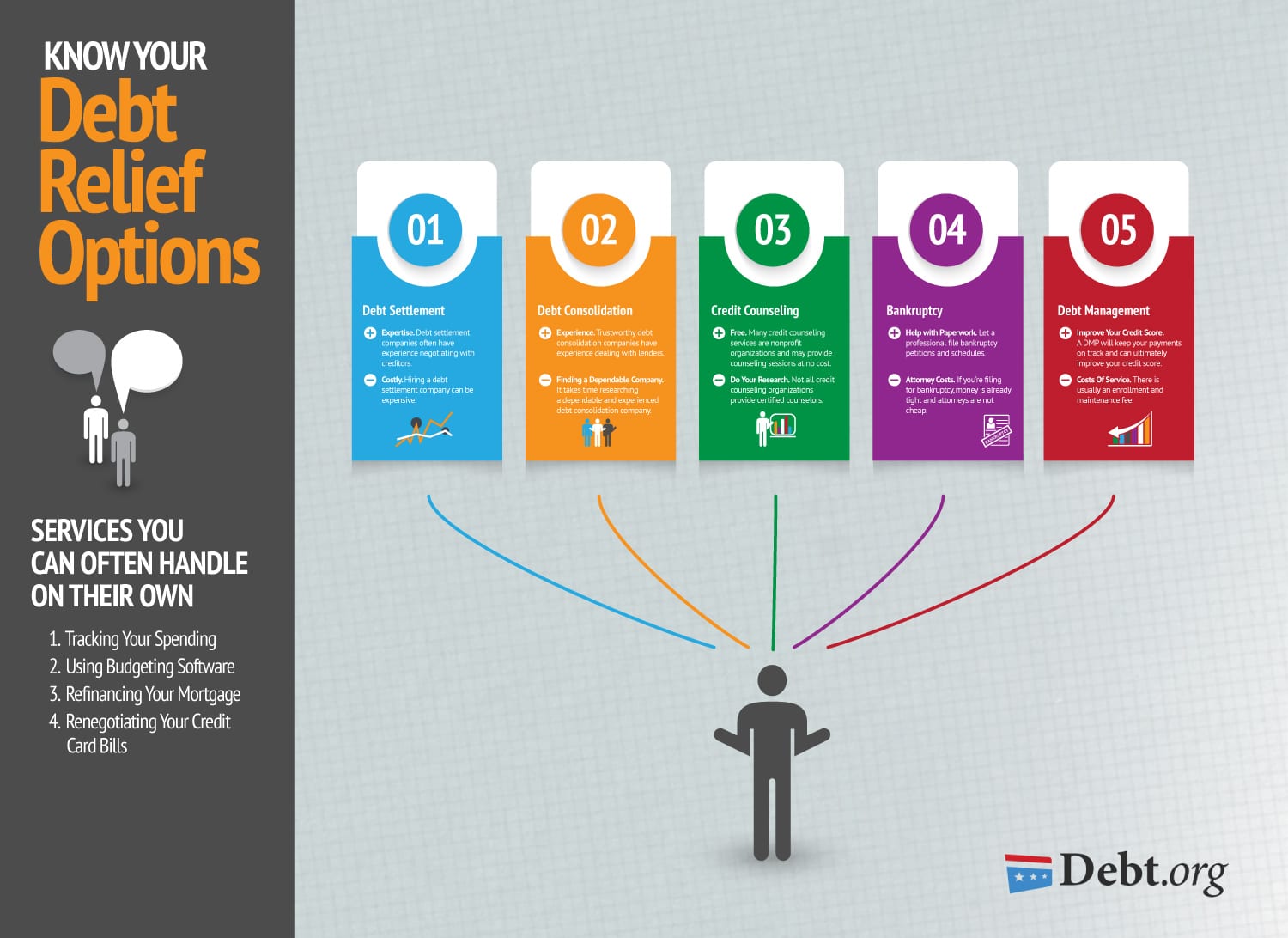
That maximizes money in the short-term, and you might have 3 to 4 years to save toward the negotiation amount. Very damaging to credit rating, mainly as a result of missed out on settlements and an unfavorable "resolved" mark that could remain on your credit rating report for approximately seven yearsMay be only choice if other options (debt consolidation, equilibrium transfer credit scores cards, debt mercy) aren't possibleTypically calls for a fee to the third party, which might balance out some or all of the financial savings from financial obligation settlementMay assist you prevent personal bankruptcy if you've missed numerous paymentsNot all financial institutions collaborate with financial obligation settlement business Financial debt mercy might be right for you if you are experiencing an economic hardship that makes it virtually difficult to pay down your financial debt balances.

With a DMP, you make one regular monthly repayment to the credit counseling agency. Those funds are after that distributed to creditors of your unsafe debts, such as bank card and installment lendings. The company deals with your creditors to reduce rates of interest or waive fees, however some creditors might decline such concessions.
It can help you pay down debt if you're able to protect a funding rate that's lower than the typical price of the accounts you're combining. You have to refrain from racking up financial obligation on those freshly removed accounts or your debt might grow also greater.
That provides you lots of time to get rid of or substantially reduce your balance while making interest-free payments.
Fascination About Is It Worthwhile vs DIY Methods
You may require it if your lender or a debt collector ever before attempts to collect on the financial debt in the future. The letter might prove you do not owe what the collection company's records reveal. Yes, in a lot of instances, the IRS thinks about forgiven debt as taxed earnings. When a lender forgives $600 or more, they are needed to send you Form 1099-C.
Financial debt mercy or settlement generally injures your debt. Anytime you settle a financial obligation for much less than you owe, it might show up as "cleared up" on your credit scores record and impact your credit scores score for seven years from the day of settlement. Your credit score can likewise go down significantly in the months resulting in the mercy if you fall back on payments.
Things about National Resources That Offer What to Do When You Can't Pay Your Income Taxes: A Complete Financial Recovery Guide : APFSC
Tax financial obligation compromise programs Tax obligation financial debt happens when the amount of tax obligations you owe exceeds what you have actually paid. This situation often results from underreporting earnings, not filing returns on schedule, or disparities discovered during an IRS audit. The consequences of collecting tax obligation financial obligation are significant and can include tax obligation liens, which offer the IRS a lawful insurance claim to your property as safety and security for the debt.
Greater rates of interest on offered credit history. Wages and Bank Accounts IRS can impose (seize) salaries and savings account to satisfy the financial obligation. Lowered income and disturbance of important economic procedures. Home Seizure In severe instances, the IRS can confiscate and sell building to cover the financial debt. Loss of beneficial properties and possible variation.
Social Stigma Encountering lawful activity from the Internal revenue service can carry social preconception. Employment Opportunities A bad credit report score due to tax financial obligation can limit work opportunities. Federal government Benefits Tax obligation debt might affect eligibility for government benefits, such as Social Safety and Medicaid.
Get This Report about Comparing APFSC to Find the Right Fit
The OIC considers numerous elements, consisting of the taxpayer's earnings, costs, asset equity, and capability to pay. Effectively negotiating an OIC can be complex, requiring an extensive understanding of the internal revenue service's standards and a solid disagreement for why your deal lines up with your capability to pay. It is very important to note that not all applications are accepted, and the procedure calls for comprehensive economic disclosure.
The internal revenue service examines your total financial situation, including your revenue, costs, possession equity, and ability to pay. You have to also be current with all declaring and repayment needs and not be in an open personal bankruptcy proceeding. The internal revenue service also considers your compliance background, evaluating whether you have a document of timely declaring and paying tax obligations in previous years.
4 Easy Facts About Why Waiting to Get Bankruptcy Counseling Makes Things Harder Explained
The application procedure for a Deal in Concession entails several thorough steps. You should complete and send IRS Form 656, the Deal in Compromise application, and Kind 433-A (OIC), a collection information declaration for people. These forms require thorough financial details, including information regarding your income, debts, expenditures, and possessions.
Back taxes, which are unsettled taxes from previous years, can substantially enhance your overall IRS financial obligation otherwise attended to immediately. This financial debt can build up interest and late payment penalties, making the initial quantity owed a lot larger in time. Failure to pay back taxes can lead to the IRS taking enforcement activities, such as releasing a tax obligation lien or levy against your home.
It is essential to attend to back tax obligations as quickly as possible, either by paying the full amount owed or by setting up a payment strategy with the IRS. By taking aggressive steps, you can stay clear of the buildup of added interest and charges, and stop much more aggressive collection activities by the IRS.
One usual factor is the belief that the taxpayer can pay the total either as a round figure or via a settlement plan. The IRS likewise thinks about the taxpayer's earnings, expenditures, asset equity, and future earning capacity. If these elements suggest that the taxpayer can afford to pay more than the used amount, the IRS is likely to turn down the offer.
Examine This Report on Developing a Personalized Debt Relief Plan
It is essential to provide accurate and complete details in your application and to talk to a tax professional to improve the opportunities of approval. Managing IRS financial debt can be intricate and complicated. Tax specialists, such as CPAs, tax lawyers, or enlisted representatives, can give very useful aid. They have the expertise to browse the complexities of tax obligation law and IRS treatments.

Table of Contents
Latest Posts
How First Assessment and What to Expect can Save You Time, Stress, and Money.
Getting My Immediate Effects of Your Credit History To Work
How to Take Action with Your Financial Recovery Process Fundamentals Explained
More
Latest Posts
How First Assessment and What to Expect can Save You Time, Stress, and Money.
Getting My Immediate Effects of Your Credit History To Work
How to Take Action with Your Financial Recovery Process Fundamentals Explained